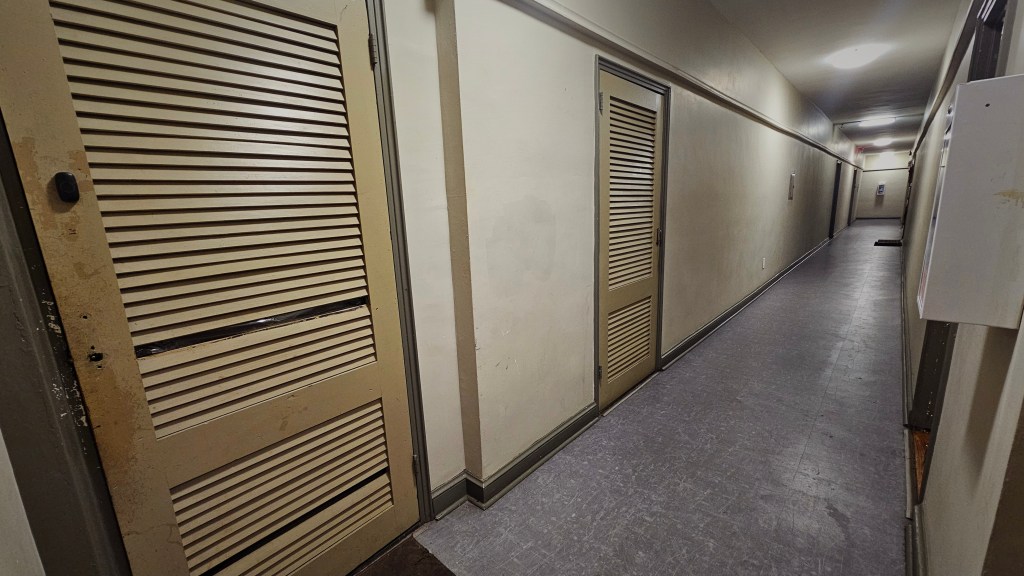
Hundreds of families throughout the city are living in moldy, leaky buildings that should have been repaired long ago. As permanent changes await the residents, advocates, and elected officials are pushing new strategies to hold the D.C. Housing Authority (DCHA) accountable. This means preventing the city’s most vulnerable families from falling through the cracks.
Conditions in many public housing units have made daily life stressful and unpredictable, residents say. Many of the problems identified in a 2022 federal inspection, which found that DCHA failed basic safety and maintenance standards, remain unaddressed today. Community organizers and policy-makers say they are developing new approaches to bring transparency, stronger oversight, and resident-led pressure to an agency that has struggled for years.
Among the loudest voices for better conditions is Empower DC, a long-standing grassroots organization working closely with public housing residents. The organization’s Housing Director, Daniel del Pielago, said residents continue to face many of the same problems they have reported for years.
“The most urgent issues we hear are varied. Conditions are always a big concern for many public housing residents,” said del Pielago.
“Another major issue affecting public housing residents is DCHA’s plan to renovate nine of its properties starting this year. Residents want to know more about what will happen, especially the relocation involved with this plan.”
While framed as an investment in public housing, many families see redevelopment as a threat to their displacement or the long-term loss of their units. Empower DC works to inform, engage, and organize those residents.
“We meet on a monthly basis with public housing residents,” explained del Pielago.
“In those meetings, we discuss issues of the day, listen to what residents have to say, and think through what we can do about these issues. For example, we are present during the monthly DCHA Board of Commissioners meetings where tenants are able to share their stories and demands.”
Del Pielago says trust in the agency remains low.
“DCHA has for many years been a troubled agency,” he said.
“We have relationships with the leadership, but still have not seen significant change with the agency. However, we hope to find ways to work cooperatively with them while still holding them accountable to do right by their clients.”
City lawmakers say they, too, are working to force change. Ward 8 Councilmember Trayon White Sr. has been very vocal about DCHA’s failures, and he said the Council is pushing oversight while demanding more transparency.
“The Council continues to provide strong oversight of the D.C. Housing Authority to ensure that taxpayer dollars are being used to fix long-standing issues and improve living conditions for families,” White said.
“I’ve been clear that accountability must come with action. That’s why I’ve supported investments in public housing repairs, pushed for stronger resident engagement, and called on DCHA to be more transparent about timelines for long-overdue maintenance.”
Over the last year, Council members have held a series of hearings regarding DCHA’s progress. Lawmakers questioned the agency’s leadership about the state of repairs, federal compliance, and the condition of more than 500 vacant units, while thousands more remain on waiting lists.
White said the goal is not just oversight but sustained improvement. For the families who call the worst conditions home, time is what stands between stability and crisis.
For residents, solutions cannot come fast enough.
Zina Moore, 62, said she used to routinely call in reports about the leaks and electrical issues that are never permanently fixed.
“They patch things, but they don’t solve things,” she said. “When the ceiling leaks, they’ll come wipe it down and leave. Two weeks later, it’s leaking again.”
Moore said the uncertainty is exhausting. “Sometimes I don’t even want to be home because I don’t know what is going to happen. But I don’t have anywhere else to go.”
She plans on attending Empower DC’s monthly meetings and says the organization will give her a voice and a sense of direction.
“I feel like people are fighting for us,” she said. “We can’t make DCHA move faster by ourselves, but together we have a voice.”
Empower DC’s solution is not just advocacy; it’s a structure. Thus, the main purpose of Empower DC is to engage in long-term organizing with public housing residents. Monthly meetings provide tenants with an opportunity to voice their concerns, receive updates, and clearly understand the redevelopment and relocation processes and their housing rights. Staff also assist in documenting conditions so that residents have accurate records when filing complaints about problems.
They support residents at public hearings by helping them prepare testimony and stand before DCHA leadership and city officials. Empower DC runs ongoing advocacy campaigns that push for fair treatment, improved conditions, and stronger accountability from DCHA, so that residents’ voices remain at the center of decisions about their homes.
This is a coordinated approach to bridge the information gaps left by an agency many believe is failing to communicate with its own residents.
The issue is simple for Moore. “We shouldn’t have to fight this hard for something so basic.”
With advocates like del Pielago and legislators like White pushing from both sides, residents are hopeful the system will finally budge toward accountability and toward truly livable homes.
 Tanaija Kee's Digital Portfolio
Leave a comment