(Photo: SDI Productions/ iStock)
By: Tanaija Kee
Black women in the U.S. face risks in every aspect of their lives, from maternal mortality and
healthcare discrimination to systematic violence and economic marginalization. Black women
are systemically exposed to violence, workplace discrimination, and poor health outcomes.
These continue to leave people wondering if there is a place where Black women experience less
discrimination or medical neglect. This story investigates where Black women feel safest, the
different healthcare systems worldwide, and their prioritizations of well-being.
The U.S is typically viewed as a leader in modern medicine, although for Black women, it is an
unequal battleground. Places like D.C., Chicago, and Atlanta have increasing rates of homicide
and gender violence towards Black women, while southern states rank among the worst in the
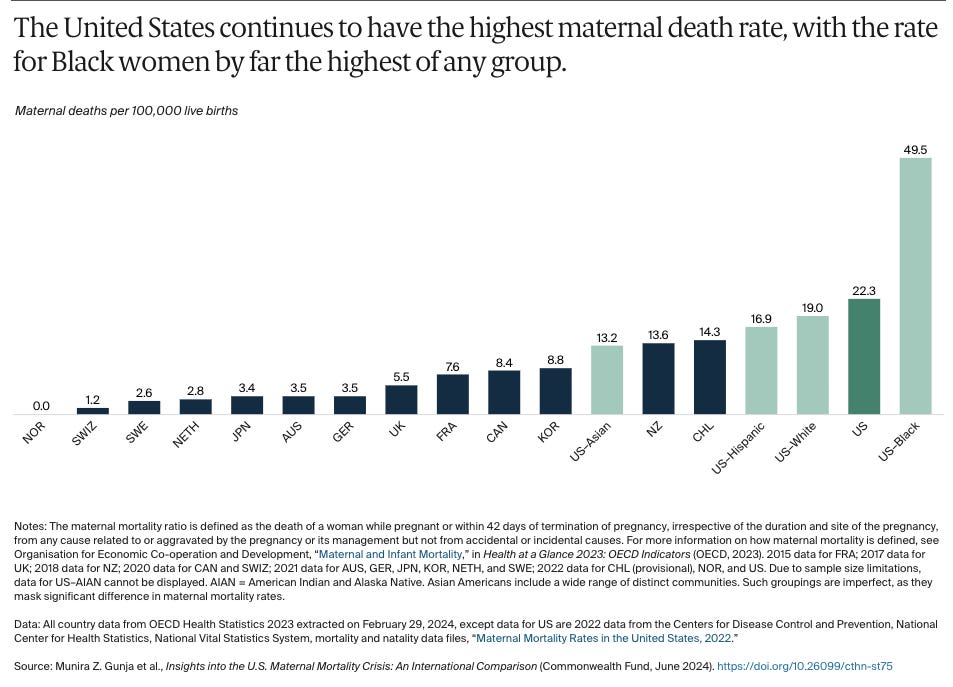
country for maternal mortality. A 2024 CDC report found that Black women are three times
more likely to die from pregnancy-related causes than white women.
Countries outside the U.S with universal healthcare and stronger protections have better data,
although Black women abroad also experience disparities. In Canada, Black women benefit from
universal health access and legal protections, while European nations like Finland and Sweden
are known for progressive social policies. They consist of fewer disparities in maternal care
outcomes. Simultaneously, Cuba’s healthcare system makes access and prevention the main
goals, and has been noted as having lower rates of maternal death than the U.S, despite reduced resources. While neither country is ideal, research suggests that these countries reduce structural
barriers and open more opportunities for Black women in health and safety.
(Photo: Munira Z. Gunja/ Insights into the U.S. Maternal Mortality Crisis Jun. 2024)
The U.S healthcare system ranks as the most expensive yet least equitable in the world. An
analysis by the Peterson-KFF Health System tracker found that the U.S spends nearly twice as
much on healthcare per capita compared to similar nations, but ranks last in outcomes, including
safety and preventable hospitalizations. Unfortunately, Black women experience the worst
inequality with less access to quality care and higher rates of chronic health issues. They’ve also
reported that Black women in the U.S are more likely to die from pregnancy-related causes than
white women. Unfortunately, it was also found that they have higher rates of preterm births and
low birth weight babies due to them being more likely to receive late to no prenatal care, which
was reported to not be from genetics or behavior, but institutional racism and provider biases.
In some countries, Black women experience better birth outcomes than in the U.S., mainly
because of prenatal programs and universal health access. Similarly, Cuba prioritizes maternal
needs through clinics and home visits. These small changes help the maternal mortality rate stay
significantly lower in the U.S. When women were asked what it’s like having a baby in 7
different countries, like Australia, the Netherlands, and Hong Kong, they reported feeling more
seen, heard, and supported compared to their experience in the U.S.
It’s important to acknowledge the historical mistreatment of Black women in American
medicine. Starting with J. Marion Sims’ experiments on enslaved women, and still earned the
name “father of gynecology,” despite forced sterilizations of Black women well into the 20th
century. His actions prove that Black women have medical racism deeply planted into the U.S
healthcare. These terrible experiences continue to live on. The 2024 KFF women’s health survey
found that Black women were more likely than white women to report negative experiences with
healthcare providers. They’ve reported being dismissed, not believed, or disrespected, causing
many of them to feel discouraged from speaking out, leading to their conditions worsening and
further endangering their health.
(Photo: stxstudio1210/ iStock)
The American Psychological Association has reported that Black women are more likely to be
misdiagnosed with severe psychiatric conditions despite being undiagnosed for depression and
anxiety, which is rooted in stereotypes and a lack of competency among providers. Despite these
stats, one central area of progress is the rise of Black-owned healthcare initiatives. The National
Black Midwives Alliance and Black Mamas Matter Alliance are working towards culturally
informed care. These Black-led programs are focused on midwifery and doula support and have
helped birthing outcomes by offering continuous care throughout pregnancy and labor. Studies
show that doula-assisted births significantly reduce the risk of complications for Black women.
While some states try to reform, California has enacted implicit bias training requirements for
physicians. They’ve expanded medicaid coverage and extended postpartum care, and it has
lowered maternal outcomes for Black women. All these are constant efforts to demonstrate the
effect of state policies on solving racial disparities.
Technology is playing a massive role in medicine; telemedicine platforms have made it easier for
Black women to access culturally understanding providers, eliminating the need to rely on
racially insensitive care. The U.S. could take note of nations like Canada and Cuba, where
healthcare is considered a universal right instead of a privilege. These countries heavily invest in
public health infrastructure, early intervention, and social support, which the U.S should consider
implementing into its systems. Yet, the U.S continues to underfund or neglect them entirely.

(Photo: andreswd/ iStock)
Overall, whether there is a safe place for Black women is not just geographic but systemic.
Despite certain countries and cities offering better healthcare outcomes and protections, for
Black women to be truly safe, there needs to be a dismantling of the deeply instilled inequalities
in American healthcare. Providers need to be held accountable by expanding access to competent
care for all genders and races, and learning from countries prioritizing prevention and public
health.
Until these changes happen, Black women will continue to seek safe spaces, whether in the U.S
or abroad, where their voices are heard and their pain is believed. That is the only way their lives
will be valued, by word of mouth and being put into action. Promises, policies, practices, and
protection should back up the safety of Black women. This is the only way they will finally feel
safe in their spaces.
 Tanaija Kee's Digital Portfolio
Leave a comment